



Table of Contents

Essentials to know
- Messenger vs Business: WhatsApp Messenger is built for personal chats, while WhatsApp Business is designed for customer communication with professional tools.
- Platform / API for scale: The WhatsApp Business Platform, or API, suits medium to large companies, offering bulk messaging, CRM integration, and green tick verification.
- Key differences: Business adds features like profiles, catalogues, quick replies, labels, and automation that Messenger doesn’t provide.
- Numbers matter – You can’t use the same phone number for both apps; a virtual or eSIM number lets you run Messenger and Business side by side.
- Why upgrade – Even sole traders benefit from keeping personal and business separate, avoiding mistakes and unlocking marketing and service features.
These days, most people are familiar with WhatsApp Messenger. It’s the app many of us use every day to message friends, family, group chats, school groups and personal contacts.
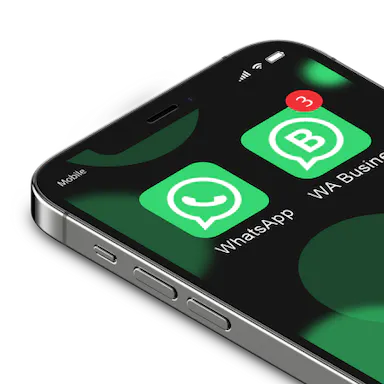
WhatsApp Business looks and feels similar to WhatsApp Messenger, but it has a different purpose. It’s designed for customer conversations, sales enquiries, quotes, bookings, product questions, after-sales support and general business communication.
That difference is key if you are a sole trader, contractor, freelancer, shopkeeper, consultant or small business owner. At the moment, you may feel that your mobile is already trying to fill too many roles. It might be your personal phone, business line, booking desk, sales inbox and customer support channel all at once.
Using the regular WhatsApp app for business can work for a short time, but it can quickly become messy and complicated. With this set up, your personal chats sit next to customer messages; you might see enquiries in the evening when you don’t have time to respond, or a customer may see a casual personal profile photo instead of proper business details. And perhaps most importantly – once your personal number is out there, it can be hard to get your privacy back.
Moving to WhatsApp Business helps solve that problem. It gives you business-focused tools while keeping the familiar WhatsApp experience your customers already know and trust. Read on to understand the differences between WhatsApp Messenger, WhatsApp Business and the WhatsApp Business Platform, and how a second number from YourBusinessNumber can help you set things up properly.
WhatsApp vs WhatsApp Business at a glance
Customers increasingly expect to contact businesses through messaging apps. They might not want to call, wait for an email reply or fill in a contact form – they may simply want to send a quick message, ask a question and get a clear answer.
That’s why, for small businesses, WhatsApp can be a powerful customer communication channel – but the version you use matters. There are three main options:
- WhatsApp Messenger
- WhatsApp Business
- WhatsApp Business Platform, often still called the WhatsApp Business API
Here’s what you need to know about these three setups.
WhatsApp Messenger
- For personal use
- Free to use
- Built for friends, family and personal contacts
- Supports one-to-one chats and group chats
- Includes messages, calls, photos, videos and voice notes
- Does not include business tools such as Catalogues, Labels or Automated Greetings
- Best for private communication rather than customer management
WhatsApp Business
- For professional use
- Free to download
- Designed for sole traders, small businesses and SME owners
- Includes a Business Profile, Catalogue, Labels, Quick Replies and Automated Messages
- Supports one-to-one chats and group chats
- Can be used with linked devices, including WhatsApp Web and Desktop
- Helps separate business and personal communication
- Best for businesses that want a simple, professional customer messaging setup
WhatsApp Business Platform
- For professional use on a greater scale
- Usually paid
- Designed for larger or fast-growing businesses
- Supports integrations with CRM systems, customer service tools and automation
- Can support multiple agents, template messages, analytics and higher-volume messaging
- Requires more setup than the free WhatsApp Business app
- Best for businesses that need advanced messaging workflows rather than a simple app-based setup
What is WhatsApp Messenger?
WhatsApp Messenger is the standard WhatsApp app. It’s designed for personal communication and is free to use on Android and iOS devices.
With WhatsApp Messenger, you can send messages, make voice and video calls, share photos, send videos, record voice notes and take part in group chats. You can also access your account through WhatsApp Web or the Desktop app.
For everyday life, it works well, offering a platform that’s simple, familiar and widely used globally. Some small businesses start out using WhatsApp Messenger to speak to customers, especially if they are just getting started. For example, a sole trader might use their personal WhatsApp to arrange appointments, answer quick questions or confirm job details. You can also now use WhatsApp’s new native multi-account feature to run two separate profiles on one phone with a second number.
The problem is that WhatsApp Messenger isn’t designed for business organisations. It doesn’t provide Business Profiles, Product Catalogues, Labels, Away Messages or Quick Reply tools. It also means that customer conversations sit alongside private chats in the same app. That can create practical problems, such as missing an important enquiry because it is buried between your personal messages, or feeling under pressure to answer customers at 9 pm because they are messaging the same number your friends and family use.
For a hobby or occasional side project, using WhatsApp Messenger may be manageable, but if you’re running a real business, it’s usually better to create a cleaner setup.
What is WhatsApp Business?
WhatsApp Business is a separate app designed for businesses that want to communicate with customers through WhatsApp.
It includes many of the same core features as WhatsApp Messenger, including messages, calls, media sharing and voice notes. The difference is that WhatsApp Business also includes extra tools to help you manage customer communication more professionally.
With WhatsApp Business, you can create a Business Profile that includes details such as your business name, logo, description, website, address, opening hours and contact information. That makes your account look more official than a personal profile with a casual photo and limited details.
You can also create a Catalogue to showcase your products or services, use Labels to organise chats, save Quick Replies for common questions and set Greeting Messages or Away Messages. For small businesses, these tools can make a real difference to their productivity and workflows.
For example, a plumber can save Quick Replies for call-out area enquiries, availability and quote details, while a mobile hairdresser can use Automated Greetings to explain booking times or share aftercare advice. A shopkeeper can show products in a Catalogue instead of sending the same photos again and again, while a consultant can use Labels to track new leads, quotes sent, invoices due and if any follow-ups are needed.
In simple terms, WhatsApp Business turns WhatsApp from a personal chat app into a practical customer communication tool.
What is the WhatsApp Business Platform?
The WhatsApp Business Platform, often still called the WhatsApp Business API, is designed for businesses that need more advanced messaging.
The WhatsApp Business Platform is different from the free WhatsApp Business app. The app is usually enough for sole traders, small businesses and smaller teams, while the platform is better suited to larger or more complicated businesses that need automation, CRM integration, multiple agents, analytics or higher message volumes.
The WhatsApp Business Platform can support:
- CRM and customer service integrations
- Chatbots and automated workflows
- Multiple agents handling conversations
- Template messages for notifications and updates
- Analytics and delivery reporting
- Larger-scale customer support and marketing journeys
- Enterprise-level brand verification and custom messaging limits
This can be useful for medium-sized businesses, larger teams or companies that use WhatsApp as a major sales or support channel.
If you want to set up the WhatsApp Business Platform, you’ll need to work with a WhatsApp partner. Currently, pricing in the UK is based on per-message billing, with charges based on who the message is sent to and the category of the message (marketing, utility, authentication, and service). If that doesn’t look right for your organisation, you might want to look at YourBusinessNumber’s own solution for WhatsApp Business for teams, which allows you to manage multiple users much more easily.
In summary, the vast majority of small businesses do not need the level of complexity that the WhatsApp Business Platform provides straight away. If you’re mainly handling customer enquiries, quotes, bookings, product questions or after-sales support, the free WhatsApp Business app is often the better starting point.
Is it better to use WhatsApp or WhatsApp Business?
For personal life, WhatsApp Messenger suits most people’s communication patterns well, but for business communication, WhatsApp Business is usually the better choice. The main reasons are that having two separate apps helps to create separation while providing better tools to manage your professional chats.
If you use WhatsApp Messenger for everything, customers and personal contacts all share the same space. That can make it harder to switch off, stay organised and present a professional image.
In contrast, WhatsApp Business gives you a dedicated place for customer communication. You can add your logo, opening hours, website and business description. You can set expectations with Automated Messages. You can save time with Quick Replies. You can organise leads and customers with Labels.
It also helps customers feel more confident. For cautious British consumers, especially when booking a tradesperson, paying a deposit or sharing personal details, an official-looking business profile can feel more trustworthy than a personal WhatsApp account. The exact benefit depends on where and how you work, but the principle is the same: WhatsApp Business is built for customer communication, whereas WhatsApp Messenger is designed for personal chats.
What happens if I switch from WhatsApp to WhatsApp Business?
WhatsApp Messenger and WhatsApp Business are two separate apps. You can move a number from WhatsApp Messenger to WhatsApp Business, but you can’t use the same number on both apps at the same time. That means if your personal WhatsApp already uses your main mobile number, you will need a second number for WhatsApp Business.
That is where YourBusinessNumber can help. With us, you can get a second WhatsApp Business number or business eSIM to use with WhatsApp Business without needing a second handset or physical SIM. You can keep using your previous, personal number on WhatsApp Messenger and set up WhatsApp Business with your dedicated business number.
Why use WhatsApp Business instead of regular WhatsApp?
WhatsApp Business gives you tools that regular WhatsApp Messenger doesn’t provide.
- Your Business Profile acts like your shopfront on WhatsApp. It can show your business name, logo, description, website, address, opening hours and contact details. For customers, that helps confirm who they are speaking to and makes your business look more established.
- Your Catalogue lets you showcase products or services inside WhatsApp. Customers can browse what you offer without you needing to send the same photos, prices or descriptions manually. This is useful for shops, salons, food businesses, trades, makers, consultants and service providers.
- Quick Replies let you save answers to common questions. You might create replies for prices, booking instructions, availability, delivery areas, payment details, opening hours or refund information. This can save a lot of time if you answer the same questions every day.
- Greeting Messages help you respond when someone contacts you for the first time. This can make the experience feel more professional and reassure customers that their enquiry has been received.
- Away Messages are especially useful for work-life balance. If you are a UK sole trader, you probably don’t want to reply to customers from your sofa at 9 pm. With business hours and an Away Message, you can let people know when you are closed and when they can expect a reply.
Labels help you organise customer conversations. You can label chats as new lead, quote sent, booking confirmed, awaiting payment or follow-up needed. This makes WhatsApp much easier to manage when enquiries start to build up.
Short Links and QR codes make it easier for customers to start a chat with you. You can add them to your website, social media, email signature, printed materials, van signage or adverts.
Linked devices and WhatsApp Web also make business admin easier. Instead of typing long replies on your phone, you can catch up from a desktop or laptop. For tradespeople, contractors and mobile workers, that can be especially useful after a busy day on site.
Can I use WhatsApp and WhatsApp Business on the same phone?
Yes, you can use WhatsApp Messenger and WhatsApp Business on the same phone, but each app needs its own phone number. For example, you might use WhatsApp Messenger with your personal mobile number and WhatsApp Business with your dedicated business number. Often, this is the best setup for sole traders and small business owners.
A virtual number or business eSIM from YourBusinessNumber can make this easier. You can keep your personal number private and use a separate number for WhatsApp Business calls and messages, online listings, quotes, invoices and your website. That gives you a more professional setup without adding unnecessary complexity.
How can I set up WhatsApp Business?
Setting up WhatsApp Business is easy.
- Get a dedicated virtual business number through YourBusinessNumber.
- Download the WhatsApp Business app from the App Store or Google Play Store.
- Open the app and verify your business number.
- Create your Business Profile with your logo, description, opening hours, website and contact details.
- Set up helpful tools such as Greeting Messages, Away Messages, Quick Replies, Labels and your Catalogue.
- Start using your new number for customer conversations.
It is worth taking a little time to set the app up properly. A clear profile, accurate opening hours and useful automated messages can make your business look more professional from the first conversation.
If your personal mobile number is already listed on your website, Google Business Profile, invoices, social media or printed materials, you may also want to update those details gradually so customers know which number to use.
Getting started with WhatsApp Business using YourBusinessNumber
WhatsApp Business is a useful upgrade for many sole traders, SME owners, contractors, freelancers and small business owners.
It helps you separate personal and customer communication, protect your private mobile number, reply faster, stay organised and look more professional. It can also help you set better boundaries, especially if customers are currently messaging you outside working hours.
The key thing to remember is that WhatsApp Messenger and WhatsApp Business need different numbers. If you already use your main mobile number for personal WhatsApp, you will need another number for WhatsApp Business.
YourBusinessNumber gives you a simple way to get that second number without buying another phone or setting up a complicated new contract.
With a dedicated business number, you can keep WhatsApp Messenger for personal life and use WhatsApp Business (or a second WhatsApp messenger instance, if you prefer) for customers, leads, bookings, quotes and support. Get cracking with a virtual number for WhatsApp or WhatsApp Business from us today!
Author:

George Lineker
Get A Virtual Number Now!
Receive your number for WhatsApp verification in just 3 clicks!